A-LEVEL TEXTILE DESIGN 2026
PRECIOUS ANOZIE | CHARLOTTE CORBETT | BROOKE EDWARDS-DALLEY | ERIN LAWLEY | ERICA NORTHAM | CAITLIN QUAIFE | MADISON THORNSBURY
A-Level textile design encourages students to work with a wide variety of skills and processes across the fields of textiles, fashion and interiors. This includes printed textiles, constructed textiles, embroidery, fashion construction, weaving and fabric manipulation. Learners are introduced to different techniques which they are then able to develop into personal final work. This can be clearly seen within the variety of imaginative outcomes produced this year.
Learners are encouraged to explore both historical and contemporary techniques and processes and to support their work with research into a range of suitable artists, designers, and trends. They are prepared for industry or Higher Education and all the learners from this year are continuing by pursuing degrees, employment or progressing onto the art foundation diploma course here at Dudley College.
I hope that you find the work inspiring. I am very proud of what the learners have achieved this year.
Clare Buchanan, A level Textile Design Tutor
Precious Anozie
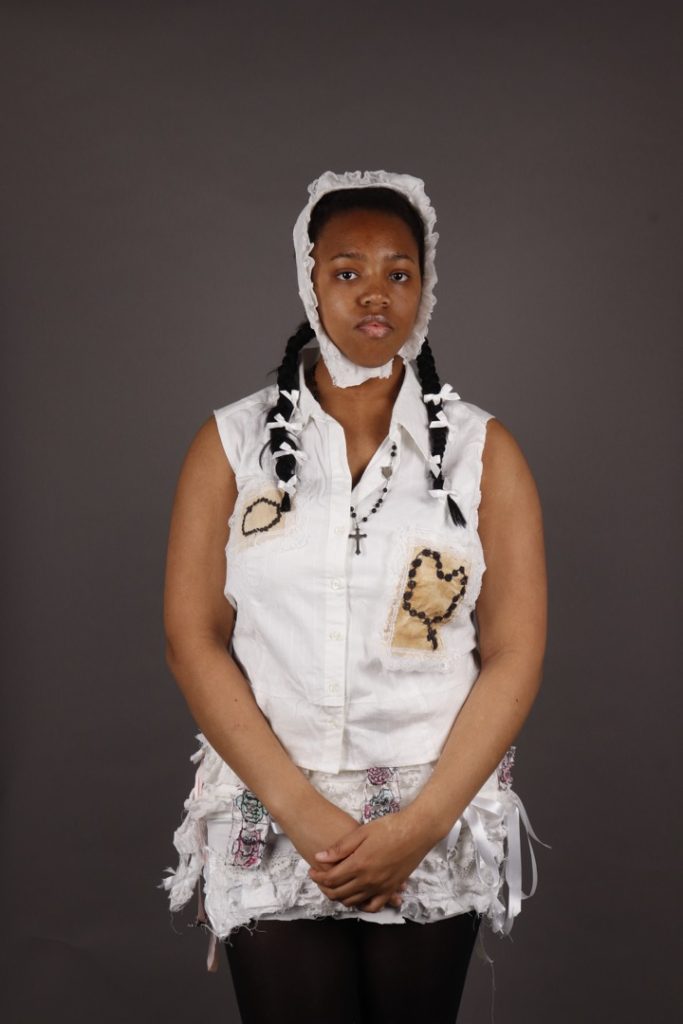
My project explores the emotional significance of personal possessions following my dad’s passing. Inspired by the theme ‘Surplus & Discarded’, I wanted to investigate how everyday objects can become memorial keepsakes that preserve memory and identity.
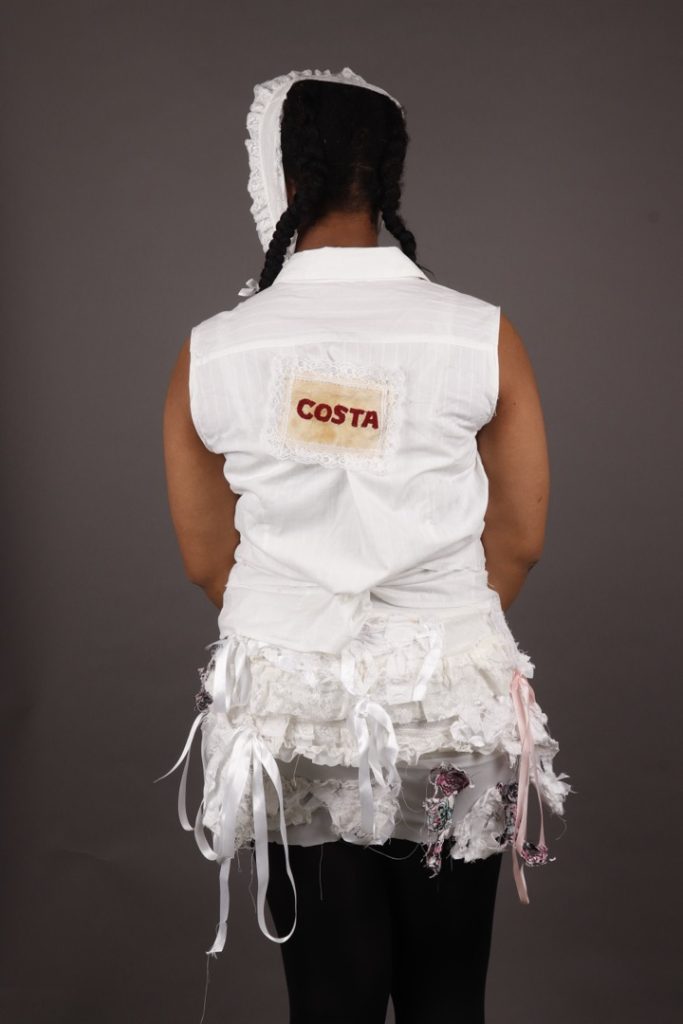
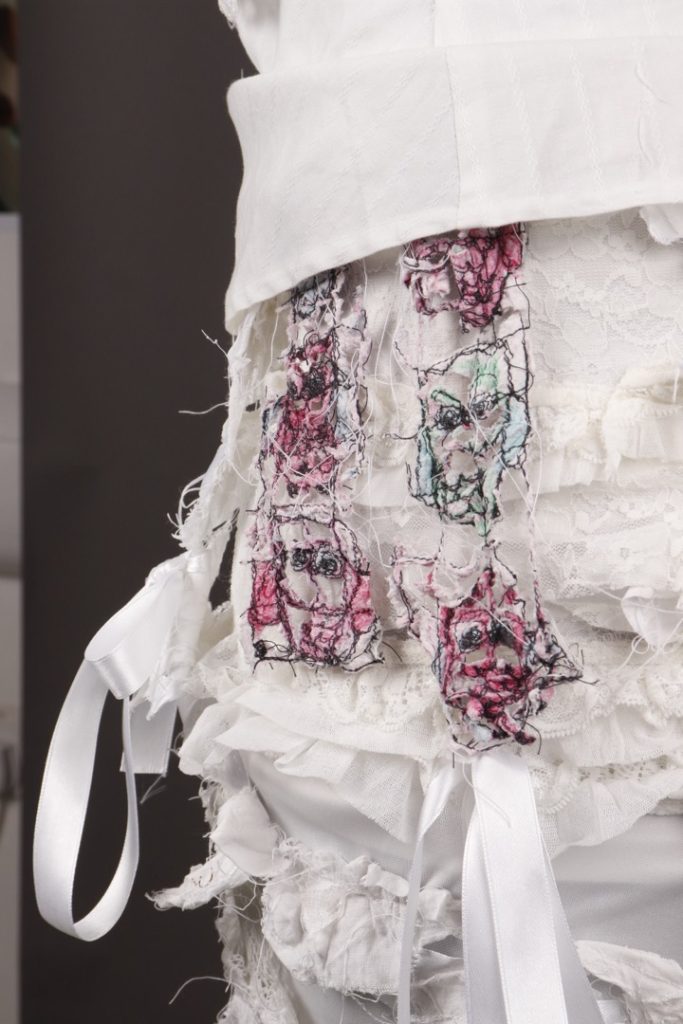
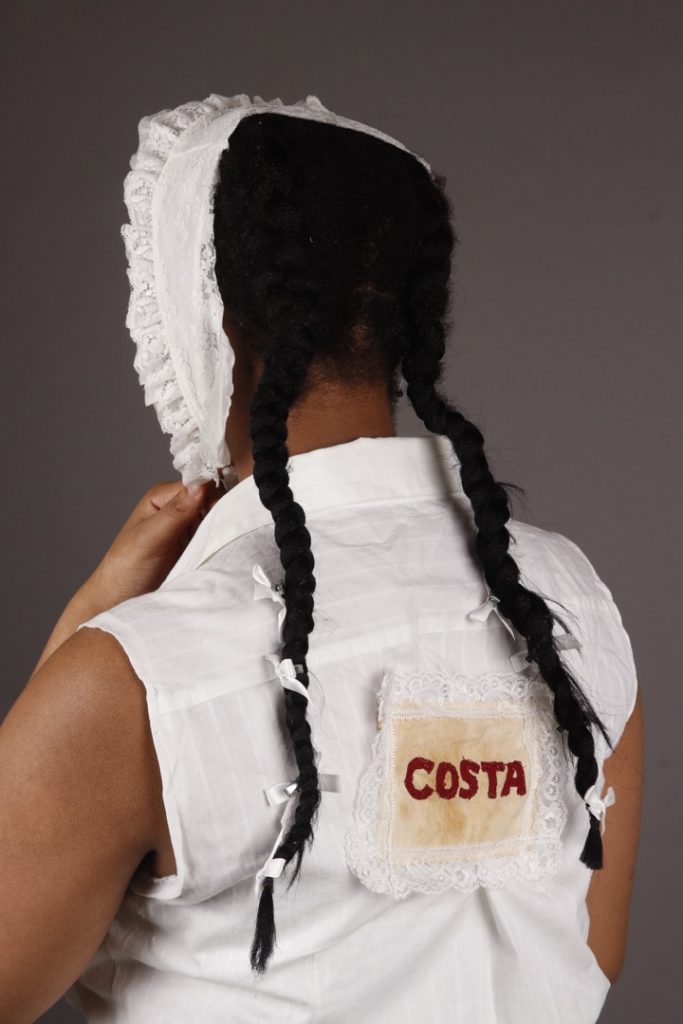
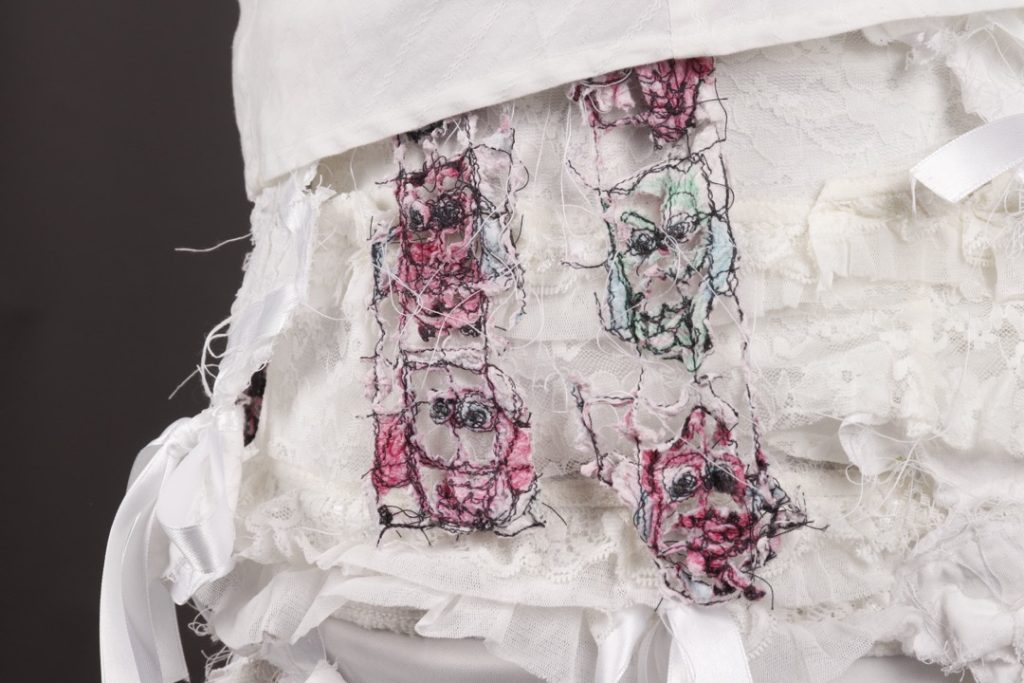
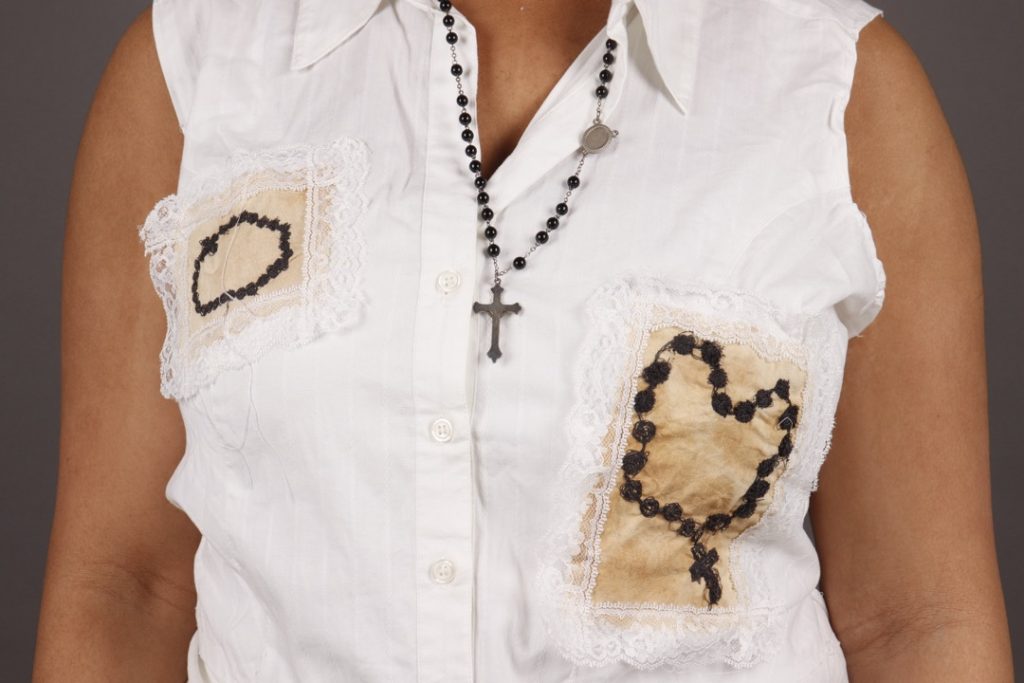
My final piece is a reconstructed waistcoat inspired by Martin Margiela, featuring embroidered imagery connected to my dad, including his rosary and the Costa logo, referencing a place we loved visiting together.
To create the piece, I used embroidery, machine stitching, and assemblage techniques with discarded fabrics and second-hand materials. I layered and reconstructed textile fragments to reflect themes of repair, remembrance, and transformation.
My intention was to transform personal memories into a wearable textile artwork that honours my dad’s presence through objects and shared experiences. By reworking discarded materials into something meaningful, I aimed to explore how textiles can preserve emotional connections and give new life to memories that might otherwise feel lost.
Charlotte Corbett
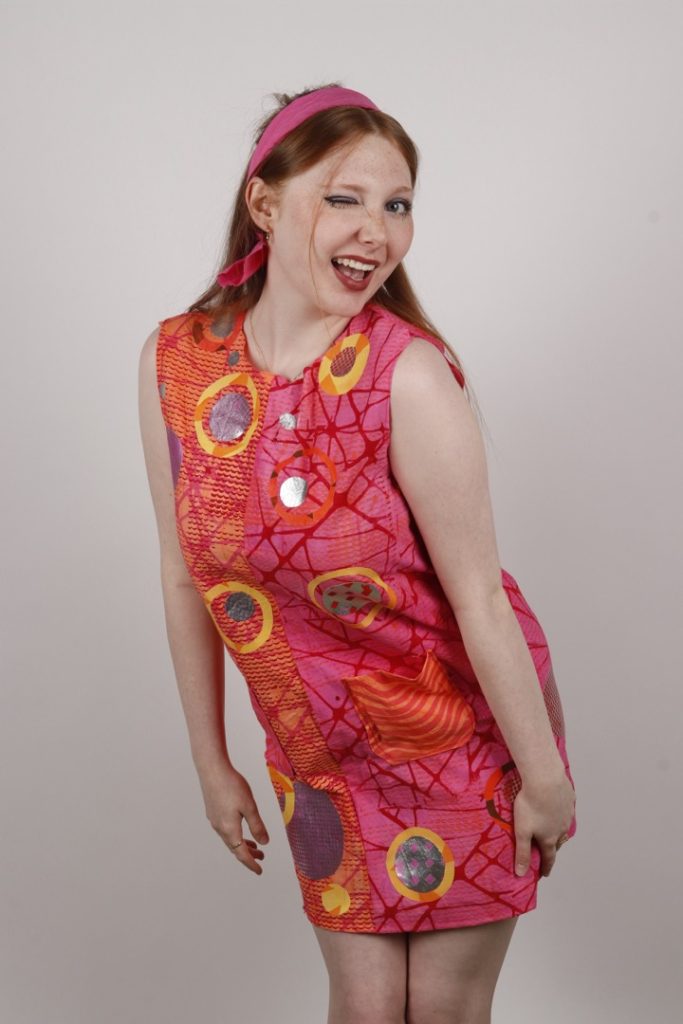
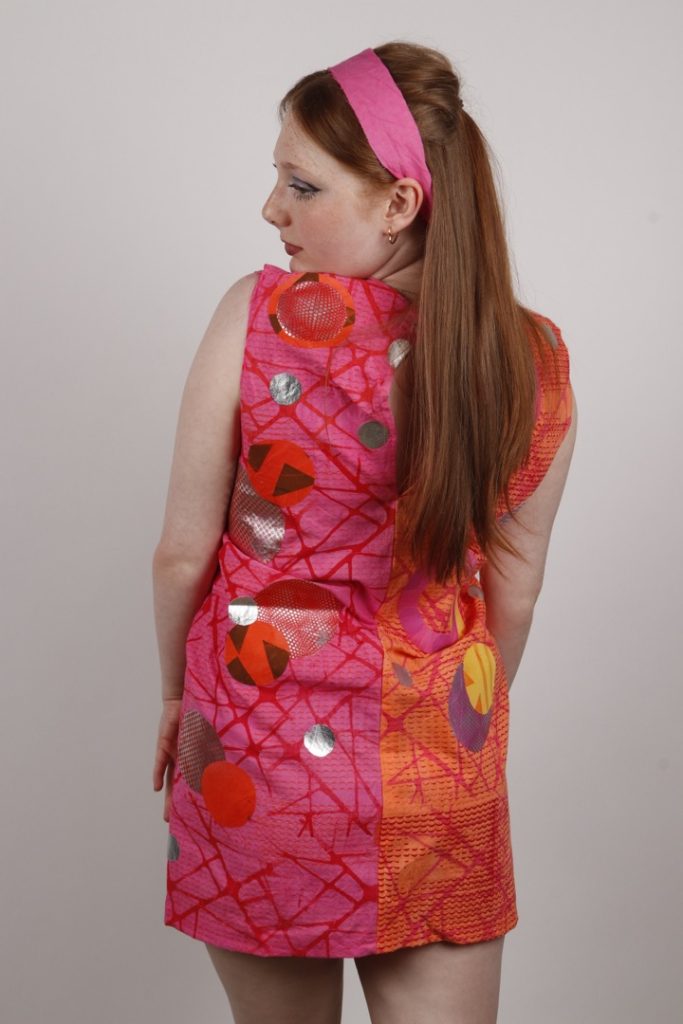
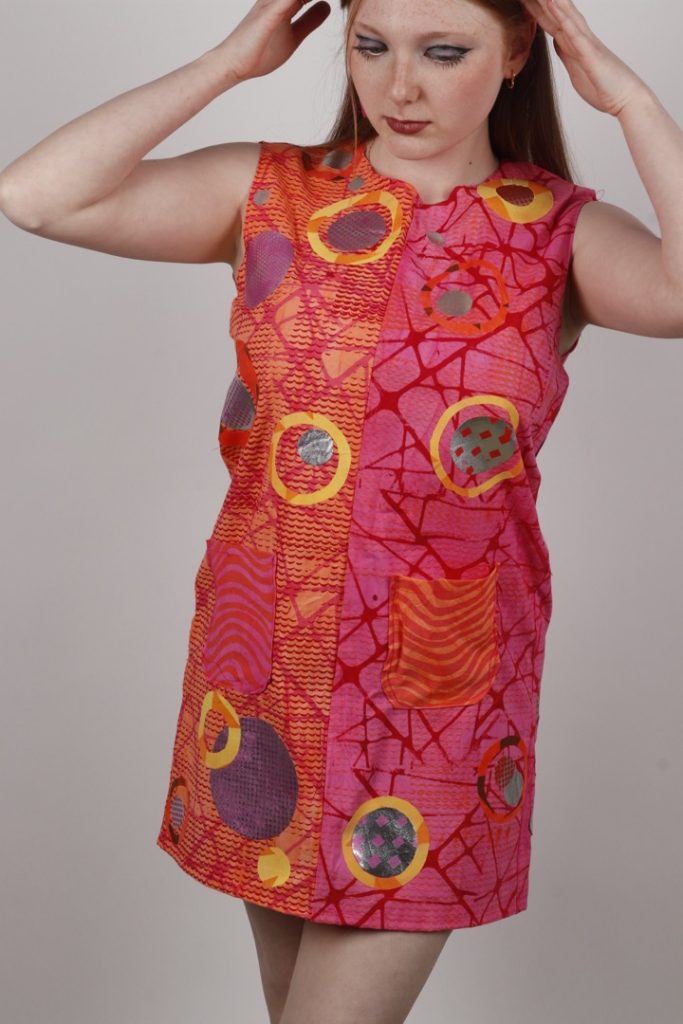
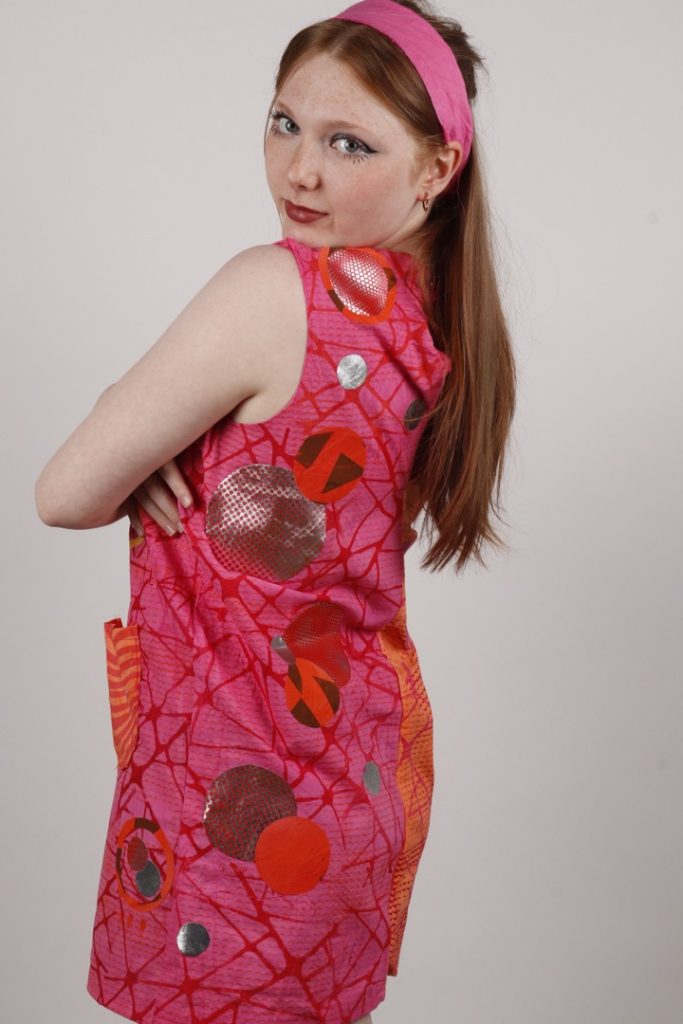
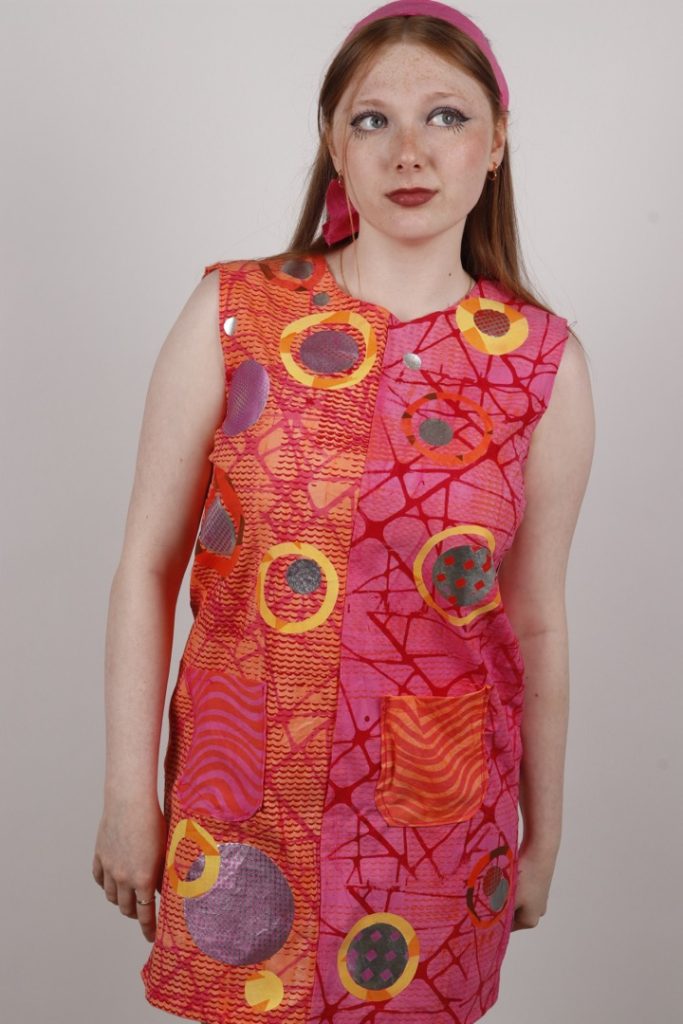
My project explores colour combinations inspired by 1960s and ’70s hippie and psychedelic fashion, with a strong focus on bold patterns and self-expression. I researched designers such as Mary Quant, Emilio Pucci, and Verner Panton, analysing how they use geometric shapes, repetition, and vibrant colours to create visually striking designs.
I was particularly interested in how circles, lines, and organic forms could be repeated and layered to generate movement and energy across a sample. This research deepened my understanding of how pattern and colour can be utilised to create powerful surface designs.
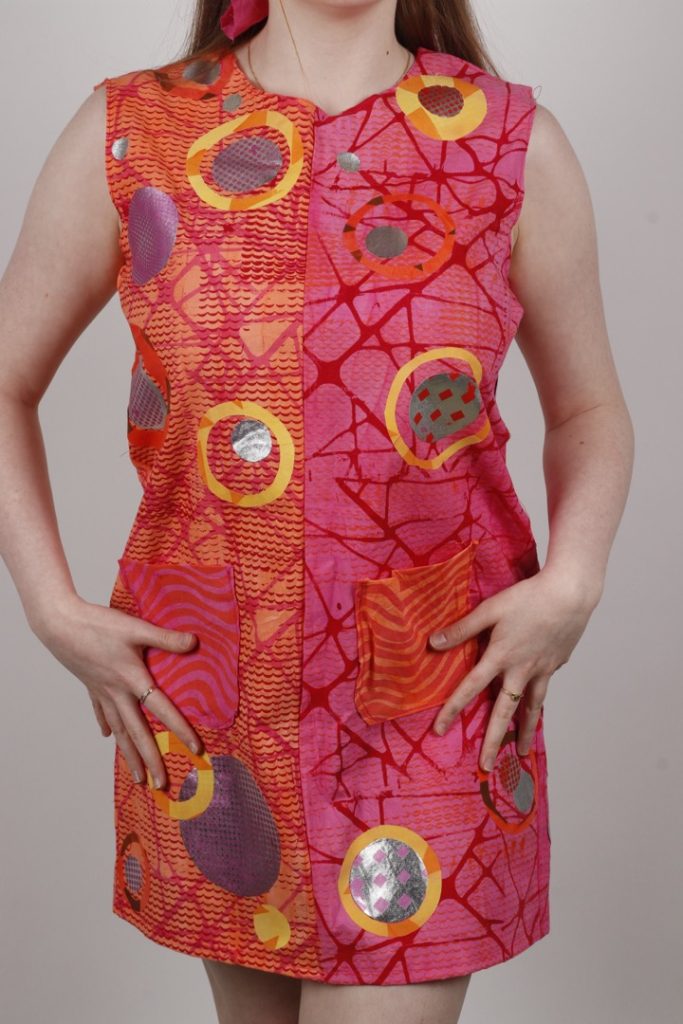
During the development phase, I experimented with multiple textile techniques, including fabric painting, printmaking, tie-dye, and appliqué. I developed both geometric and organic patterns, playing with the scale and placement of shapes to see how they affected the overall composition.
Driven by colour theory, I selected a sunset-inspired palette of oranges, pinks, and warm tones, which kept the collection cohesive while remaining bold and eye-catching. I also drew inspiration from disco imagery—particularly the mirrored surfaces of disco balls—which led me to incorporate layered shapes and reflective fabrics for added texture and movement.
My final piece is a shift dress that marries a classic 1960s Mary Quant-inspired silhouette with 1970s colour and pattern influences. I chose a simple silhouette to ensure the surface design remained the focal point. Using appliqué, I layered various fabrics and shapes to build depth. The repeated circular motifs and contrasting panels proudly reflect my artist research whilst maintaining an original flair.
Overall, my project is successful in demonstrating a clear evolution from initial research to the final outcome. I have synthesised influences from multiple artists and tested various techniques to develop my own unique ideas.
To refine my work further in the future, I would experiment with a wider range of techniques and machine-stitch around the appliqué shapes to achieve a more polished, professional finish.
Brooke Edwards-Dalley
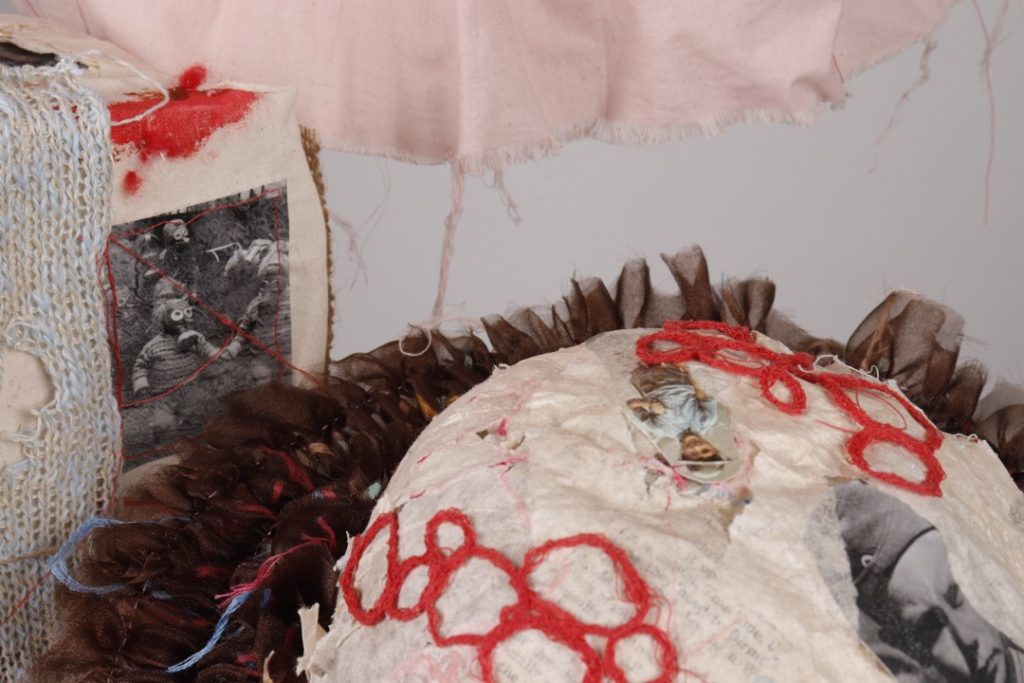
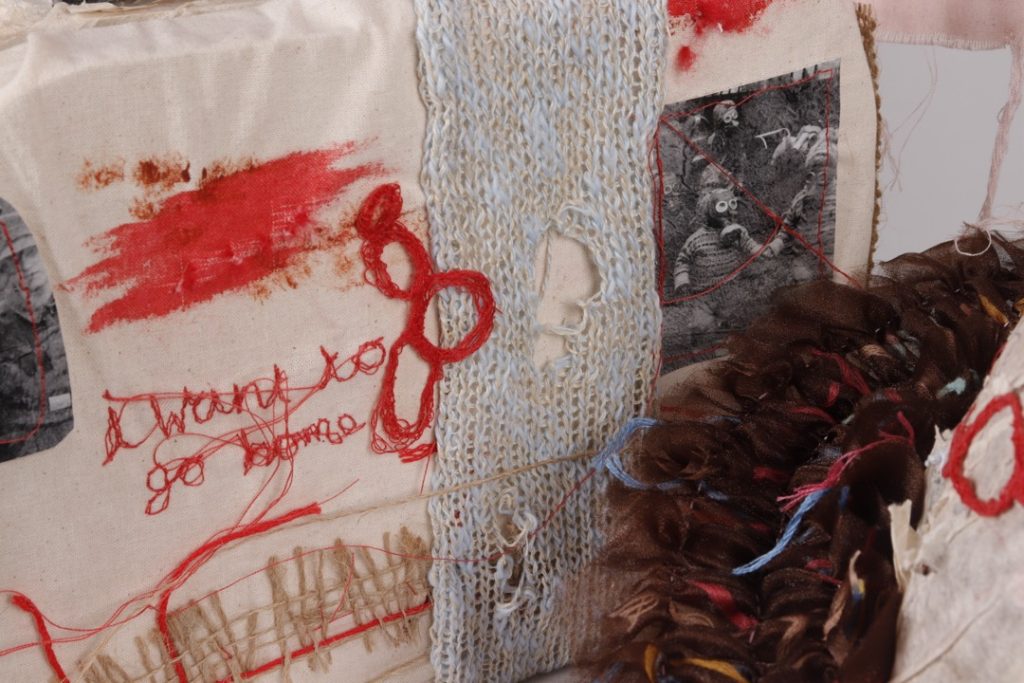
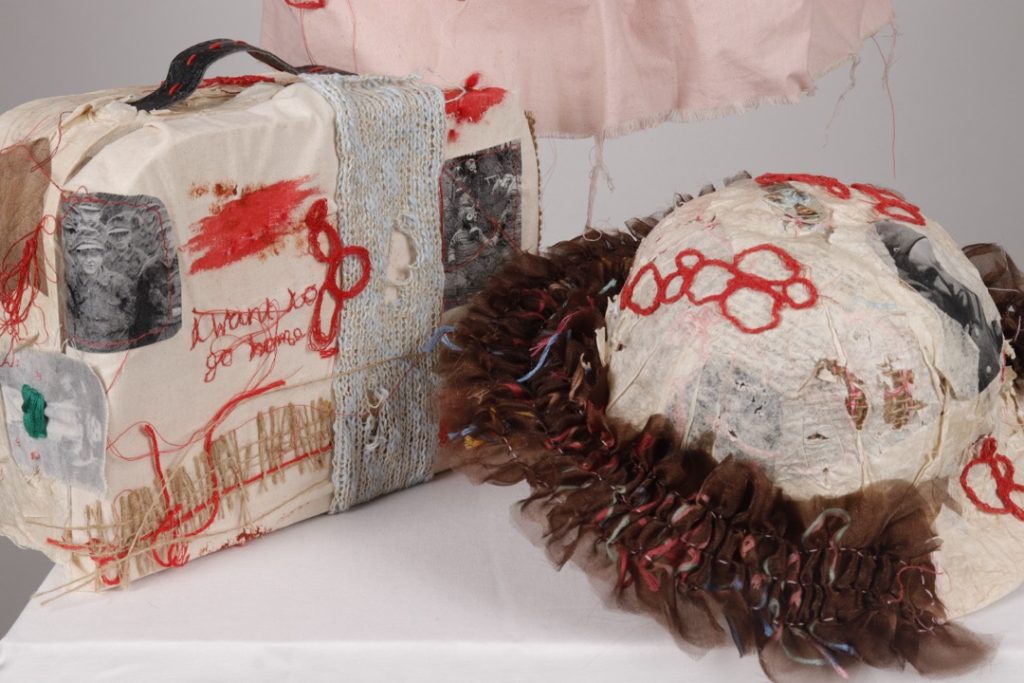
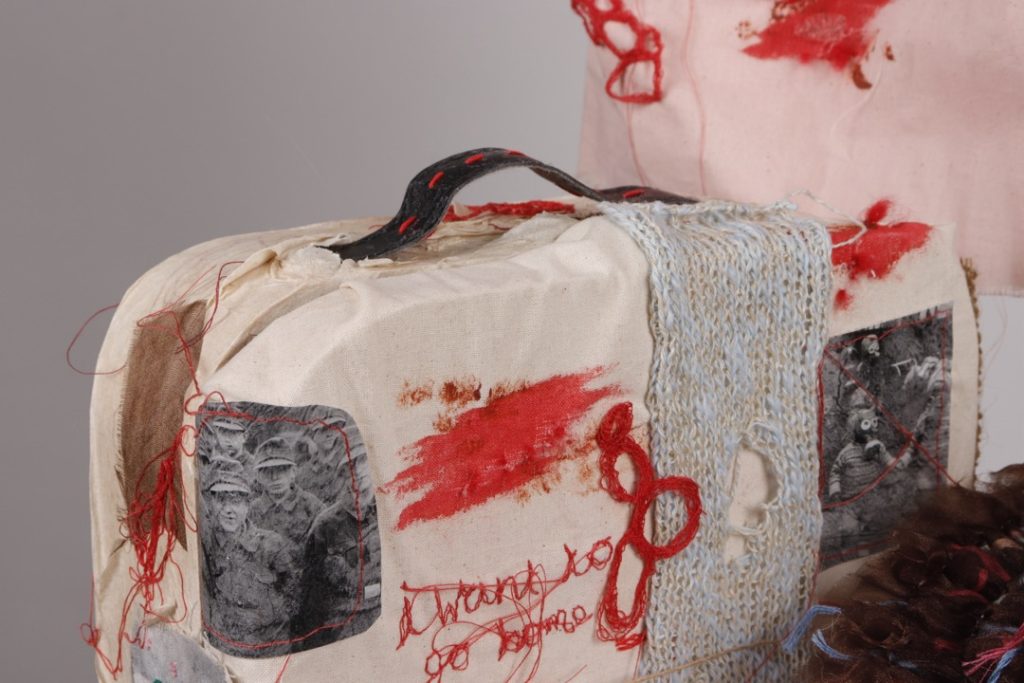
In this project, I explored the theme of protection from a unique perspective: how British children needed safeguarding during the Second World War and their journeys as they fled to safety.
I researched images taken from this era to see what was popular and found that features such as collars, floral prints, dark colours, and gathering were very common during this period.
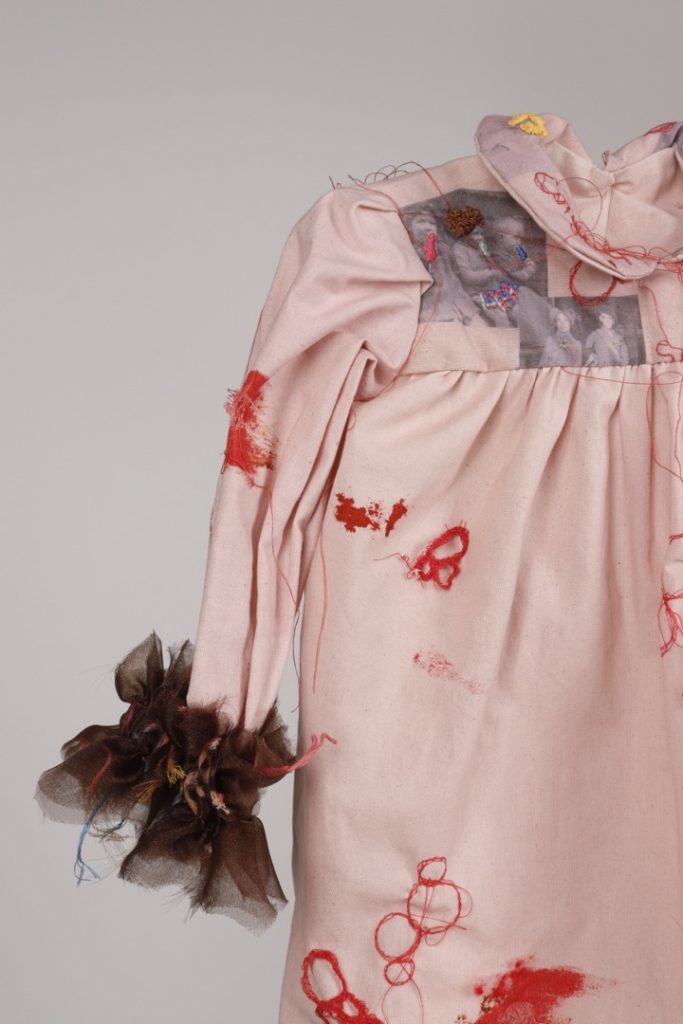
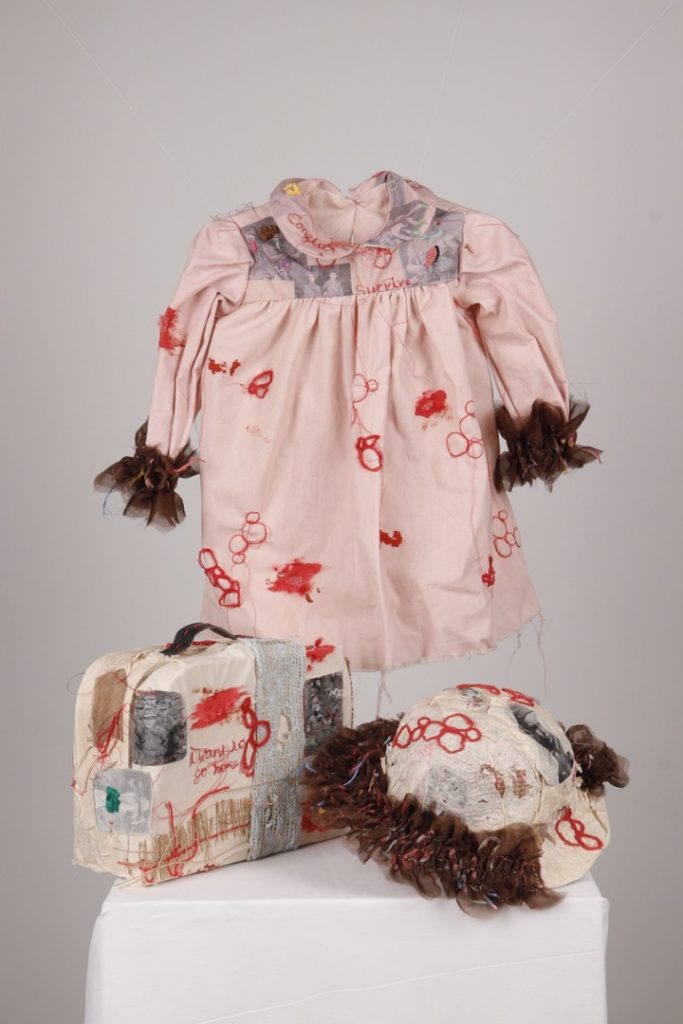
I created a little girl’s dress incorporating some of these features, adding smocking and embroidery to put my own spin on the style. The smocking is inspired by the dirty, muddy floors the children had to endure, while the colourful embroidery draws attention to the youth and innocence present throughout this period.
Furthermore, I created a suitcase to illustrate the children fleeing from their homes, alongside a helmet—something many children had to carry around with them for protection during unexpected emergencies.
I incorporated a running theme of red throughout all the pieces to symbolise the bloodshed. I also messily machine-embroidered words onto the objects; this was to make them feel more personal to an individual, as though they had been taken straight from a child living through the war.
Erin Lawley
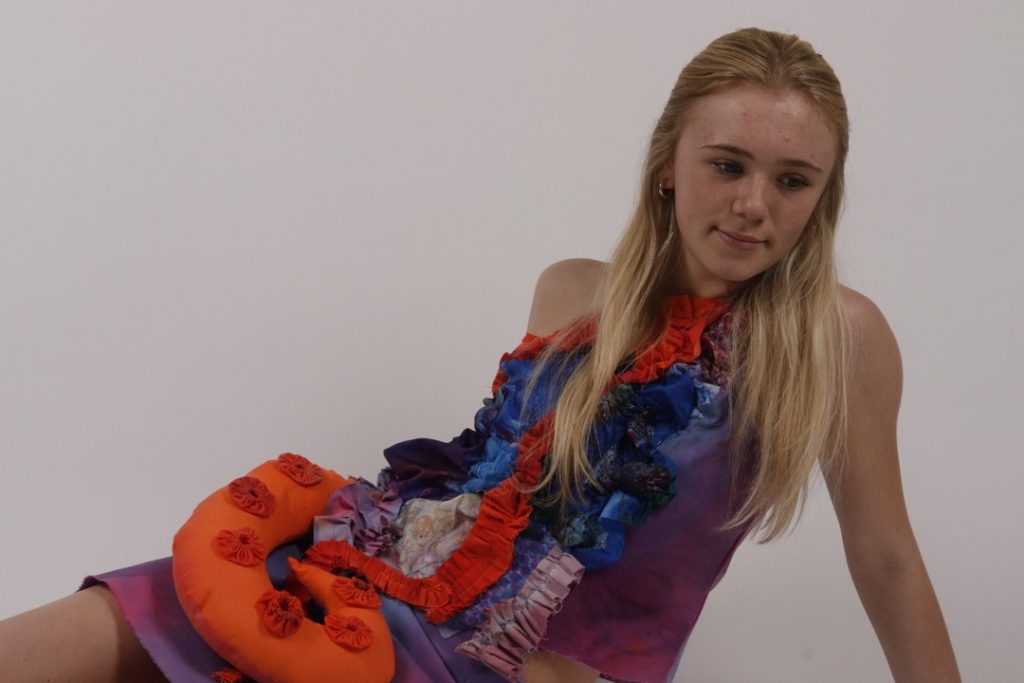
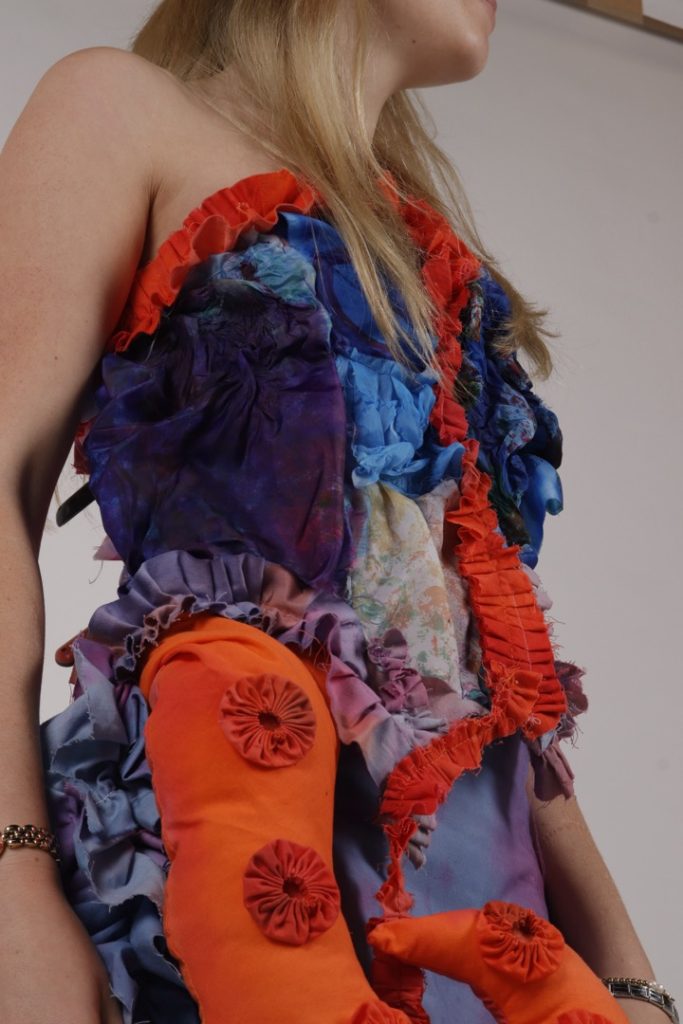
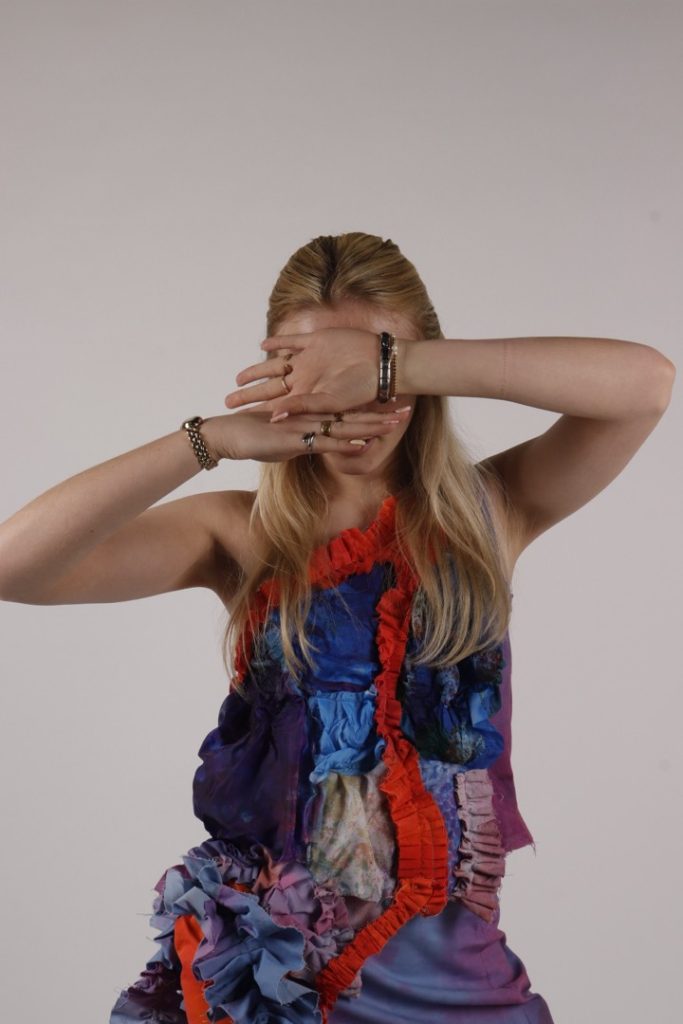
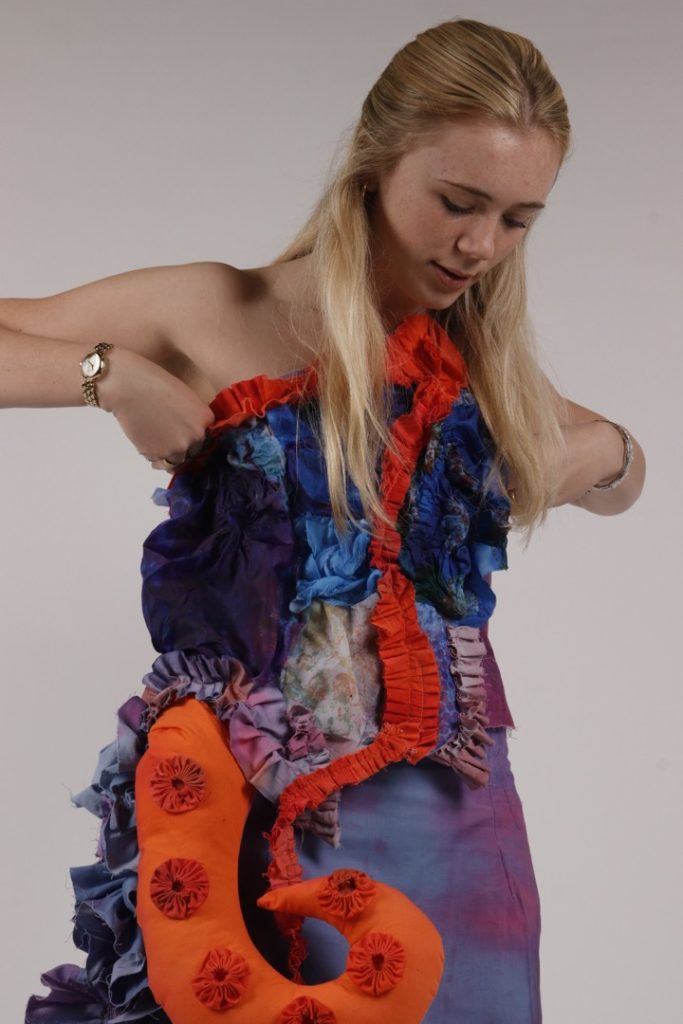
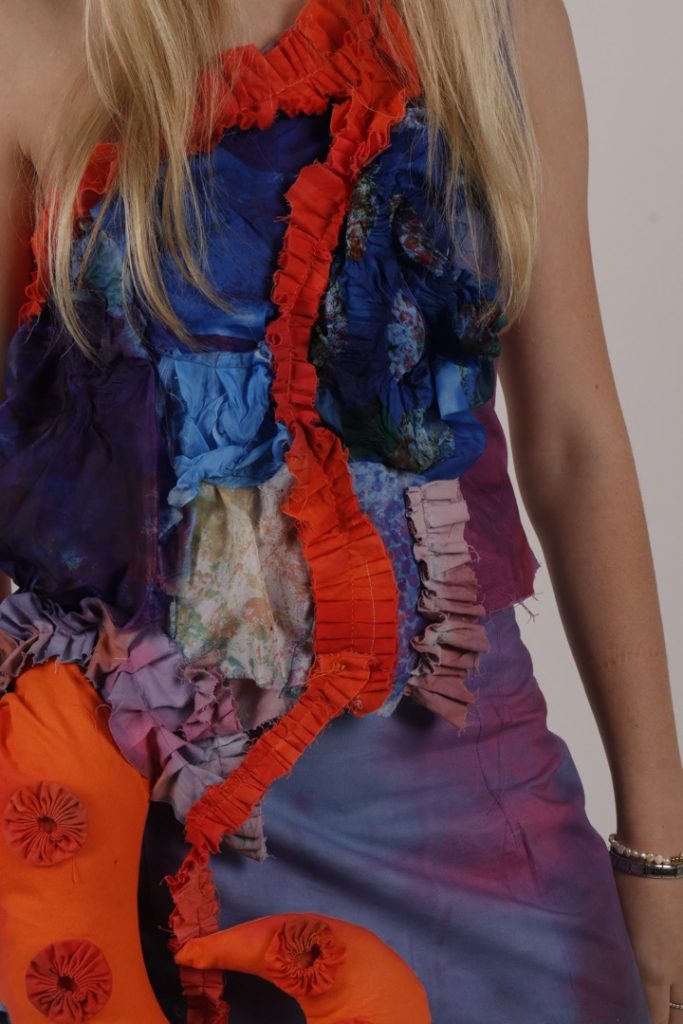
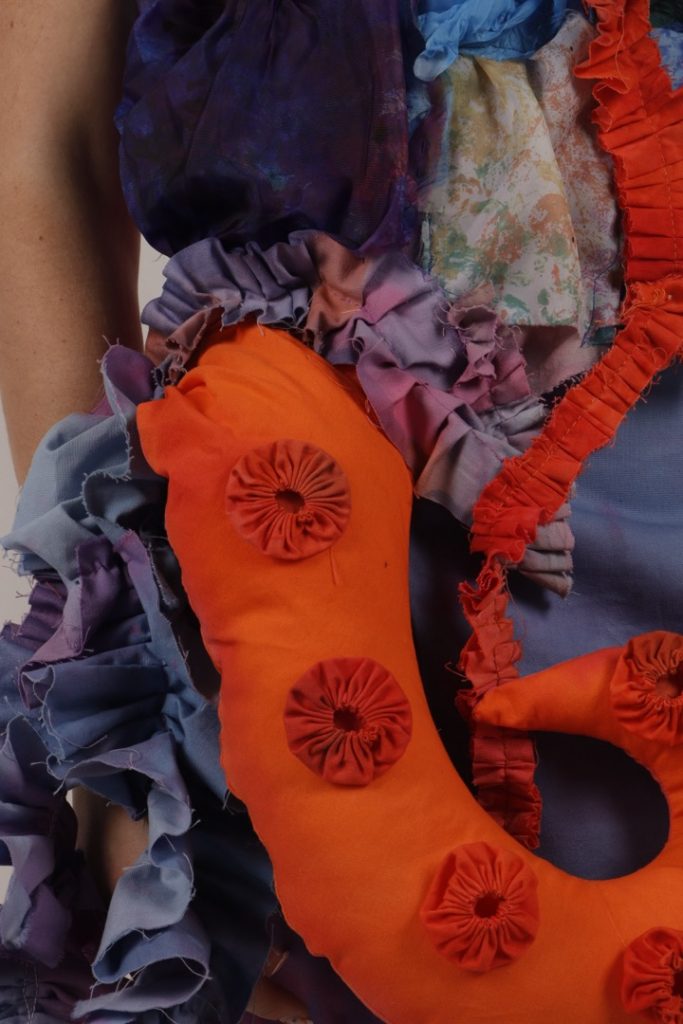
For Component 1, I chose to explore a highly personal theme: my lifelong love for the sea. I developed my sketchbook by experimenting with various textile samples, drawing direct inspiration from the anatomical traits of marine life, particularly octopuses.
The tentacle became a dominant motif throughout my research, heavily influencing the drafts for my final designs. I knew I wanted to incorporate three-dimensional elements to make the garment visually striking whilst ensuring it remained entirely wearable. Integrating sculptural tentacles alongside voluminous ruffles proved to be a highly effective way to achieve this.
I am immensely proud of the final piece and believe it perfectly captures the essence and movement of sea creatures, just as I originally intended.
Erica Northam
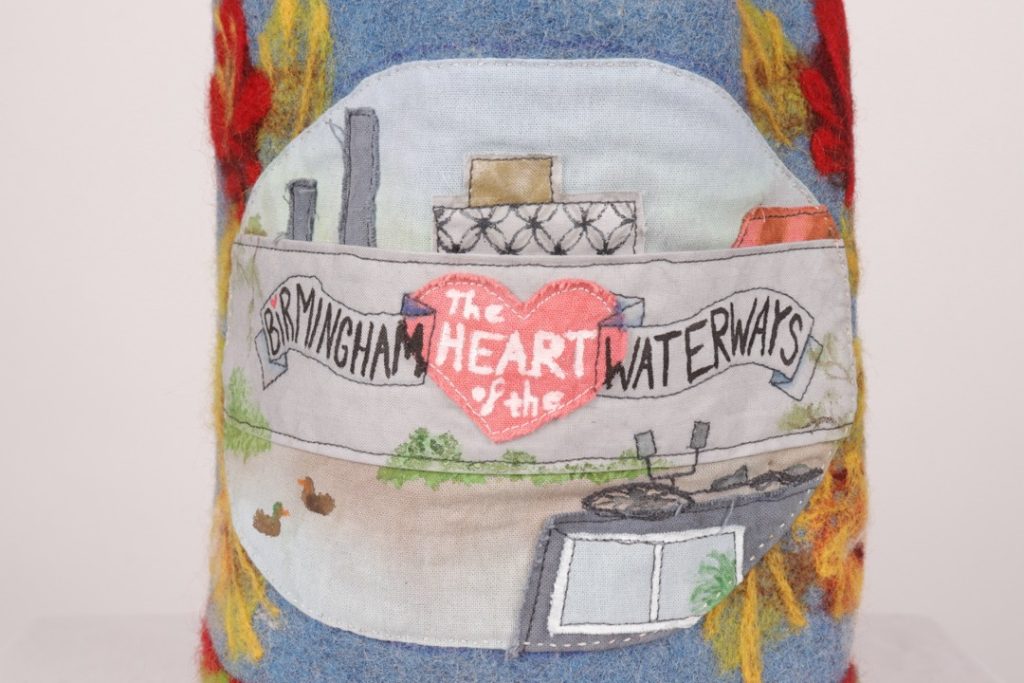
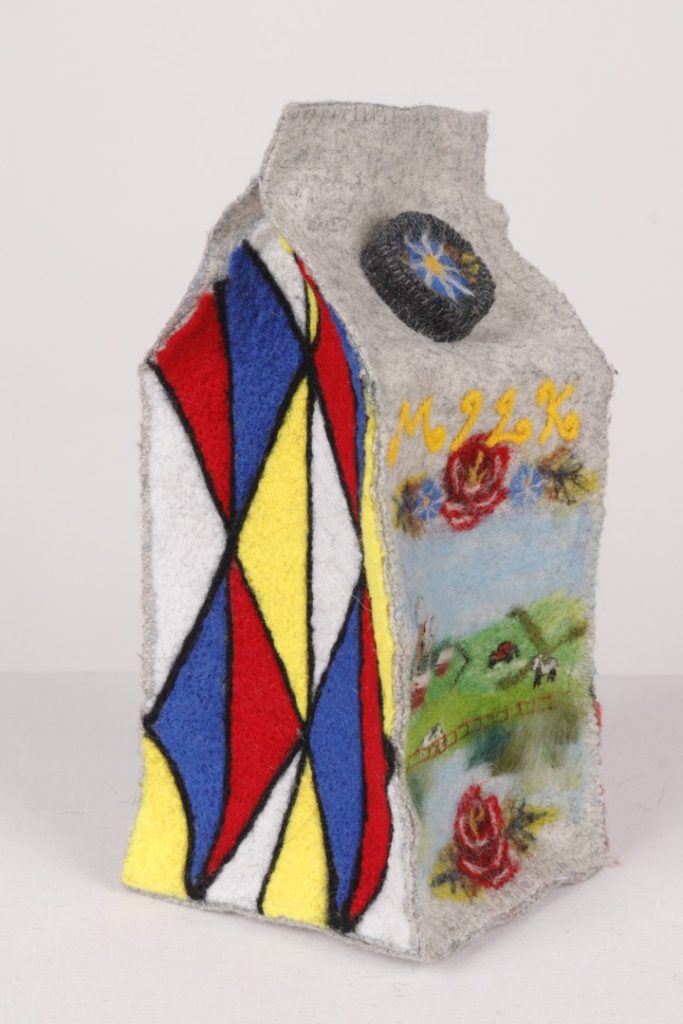
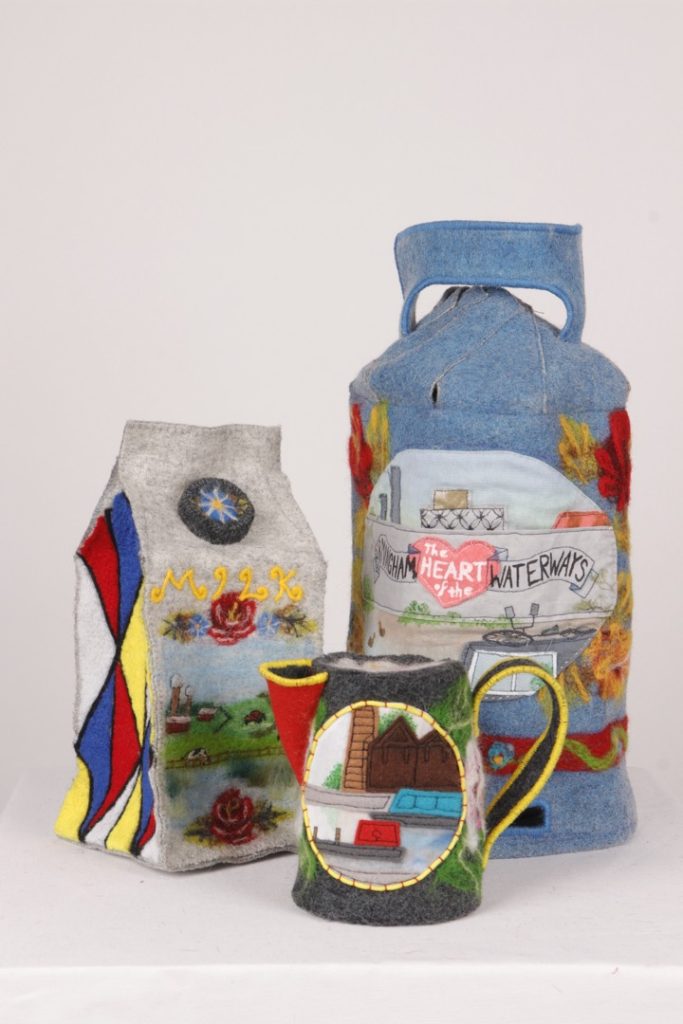
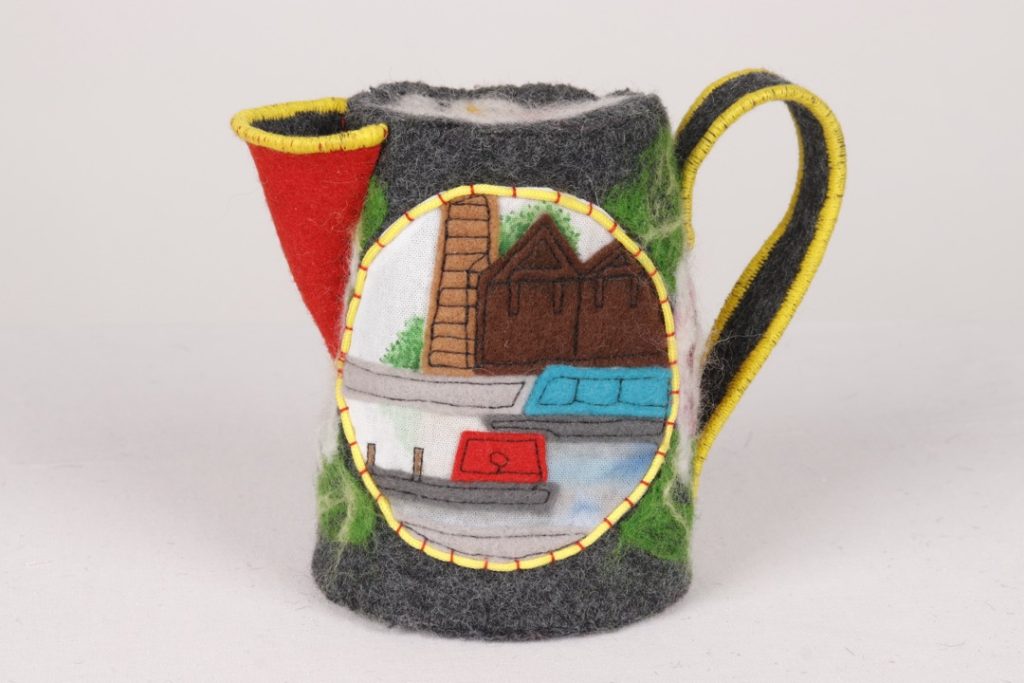
This project explores the theme of ‘Canals and Narrowboats’, which is one of my personal fascinations. I wanted to investigate both rural and urban canal imagery, different boat types and interiors, vivid boat painting, ‘Roses and Castles’ canal folk art, and the industrial history of waterways.
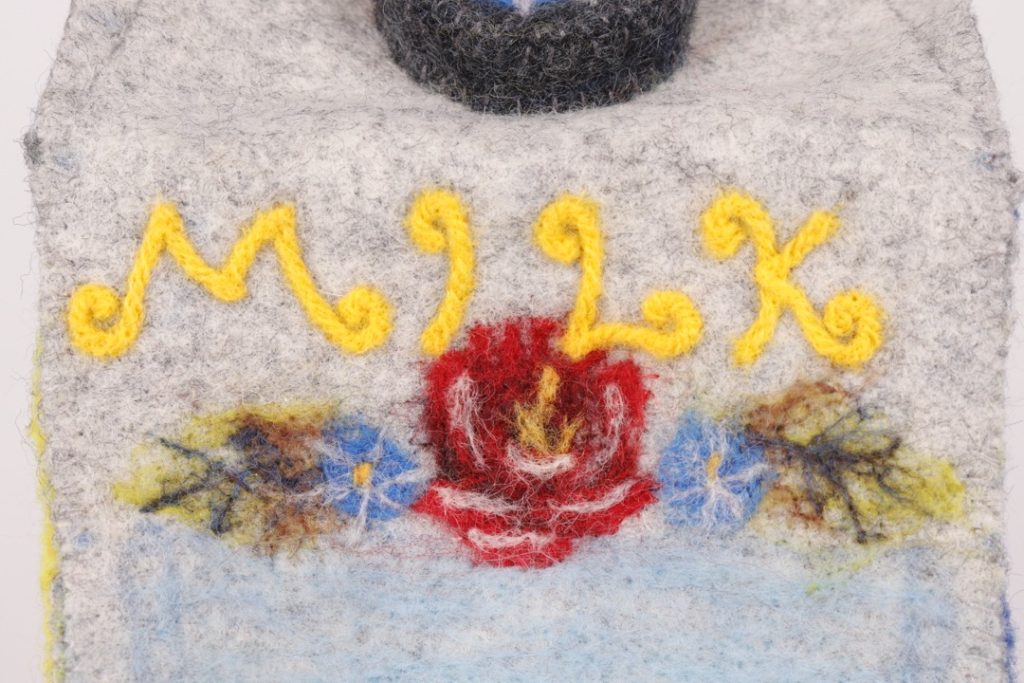
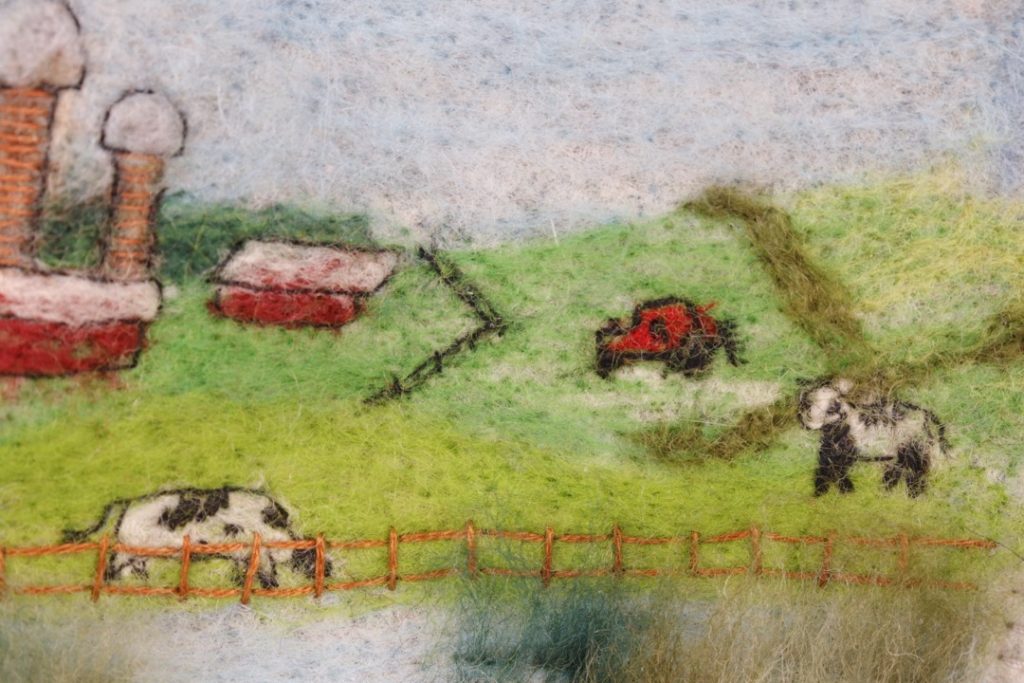
These felt objects were designed to resemble historical bargeware (a ‘Buckby’ watering can) as well as objects that might be found on a modern narrowboat (a butane canister and a milk carton), embellished with patterns inspired by Roses and Castles. Relevant canal landscapes are featured on them, with details such as animals, plants, and local buildings.
I used dyed and printed fabric for my backgrounds, alongside appliqué, painting, and embroidery to create detail, and lots of hand felting for the floral patterns. Having experimented with multiple techniques and investigated many aspects of my theme, I synthesised them into a collection of appealing, colourful, detailed items that celebrate life and history on the waterways.
Caitlin Quaife
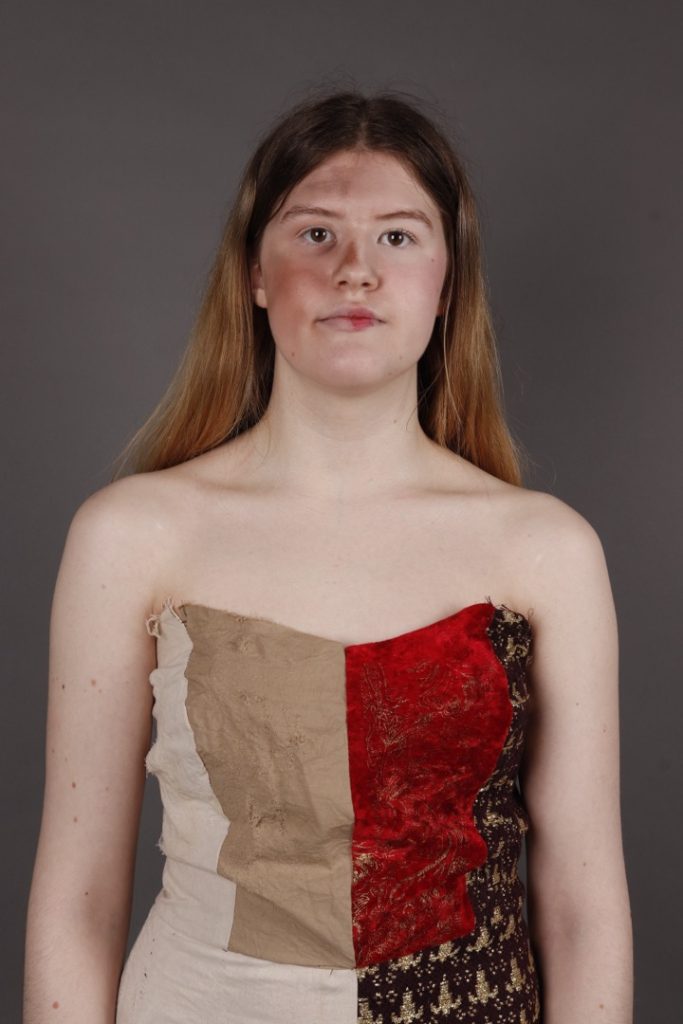
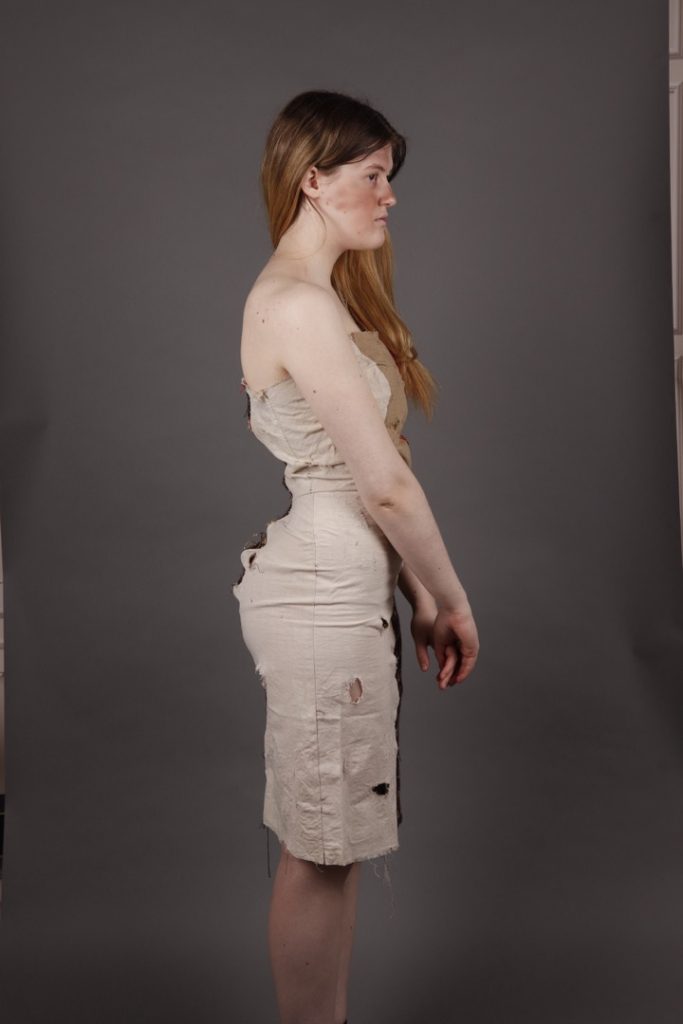
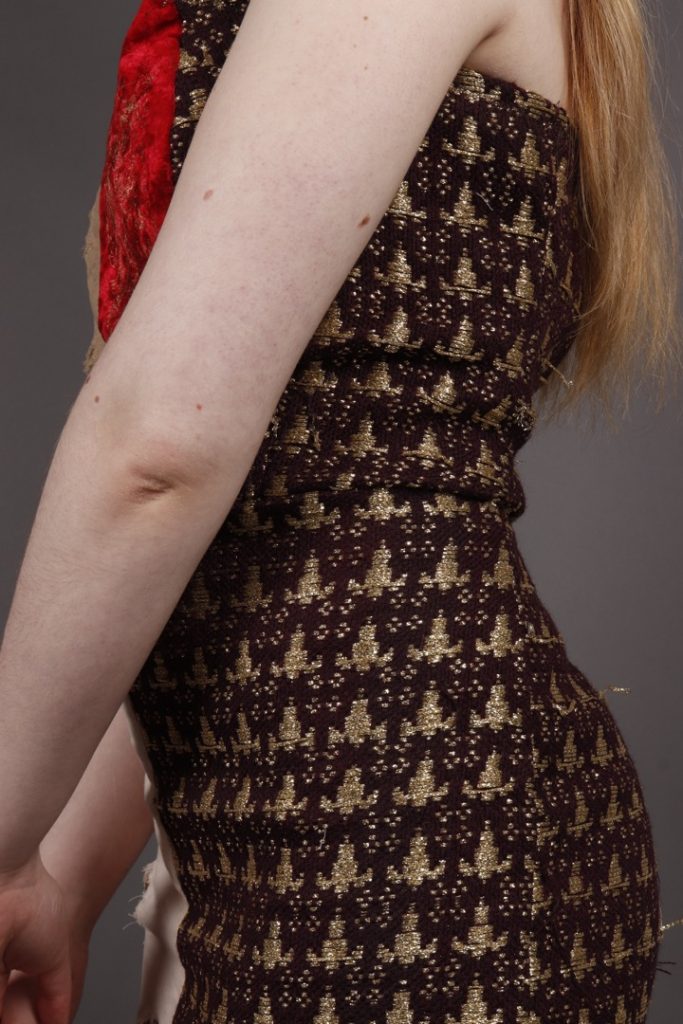
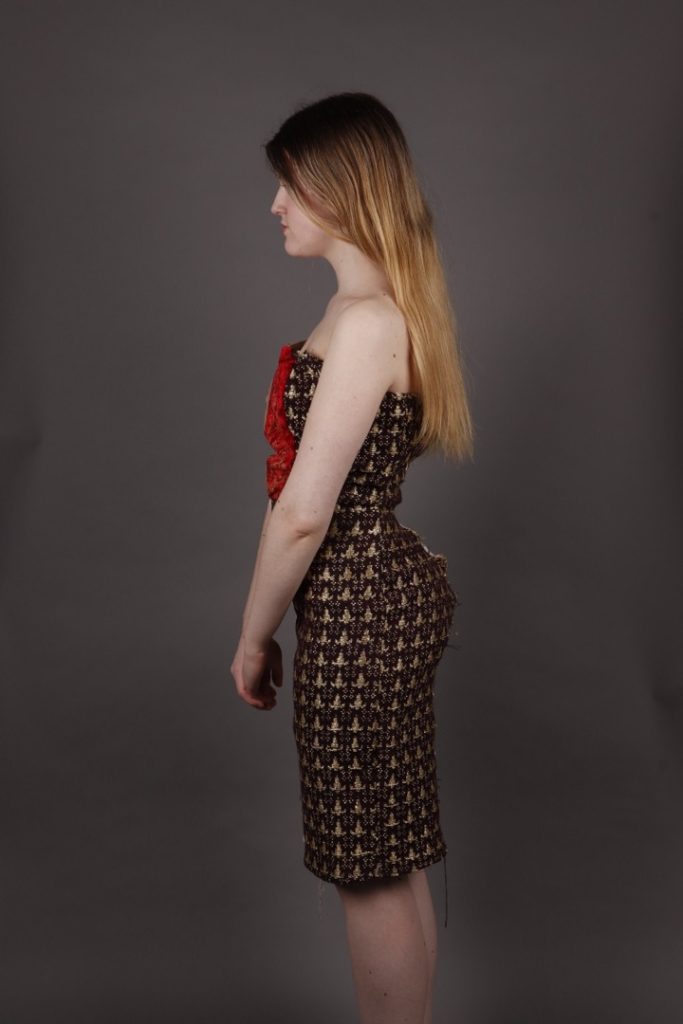
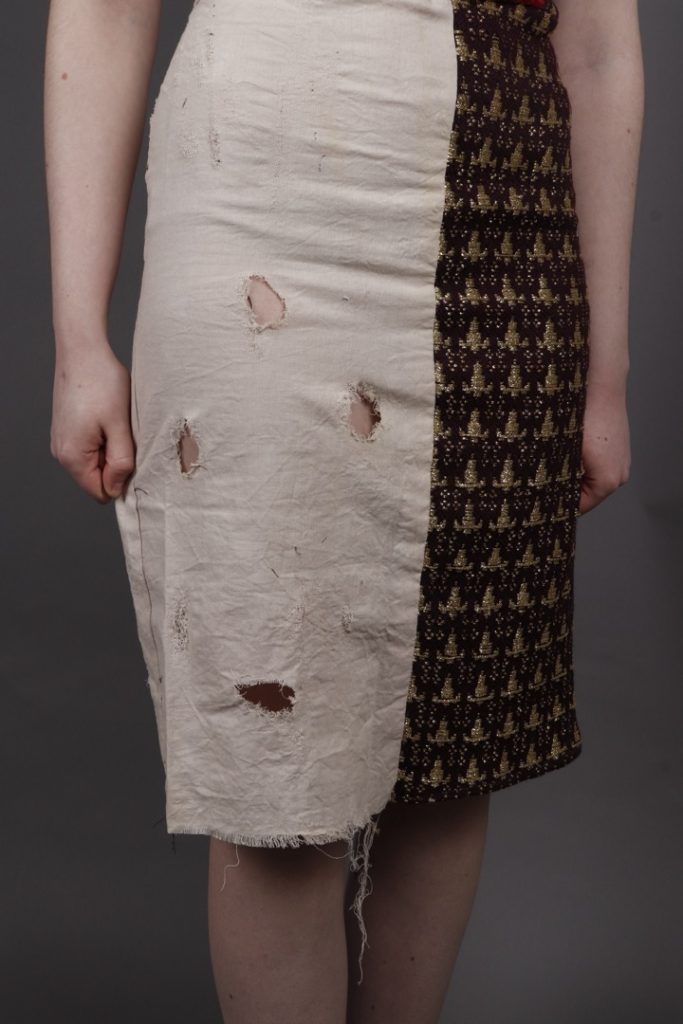
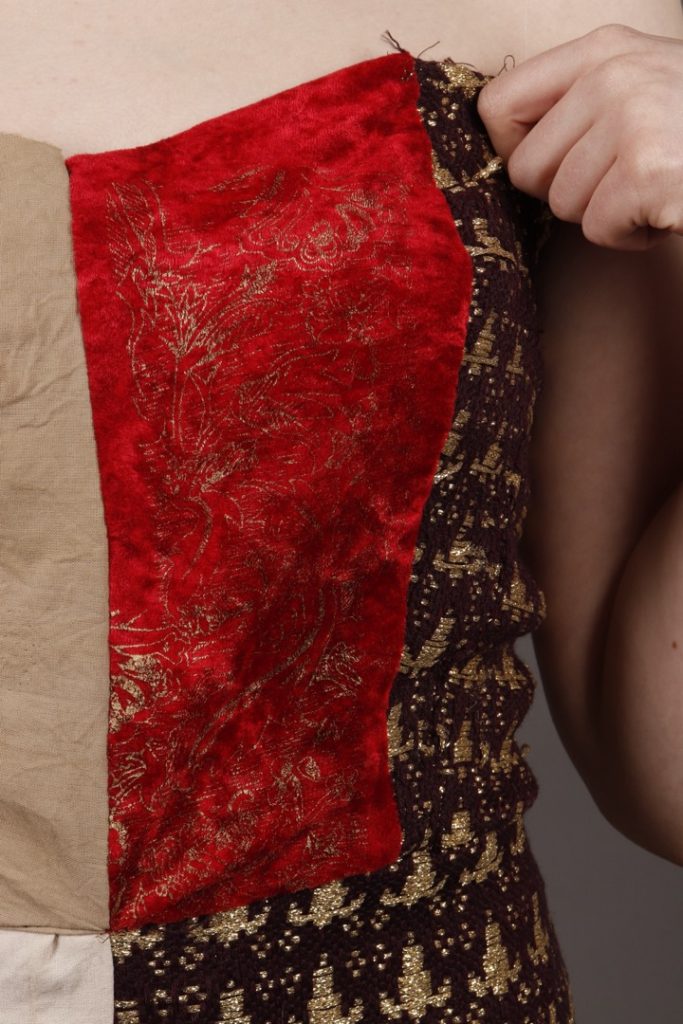
This piece is about opulence and the contrast between the poor and the rich.
I wanted to create something that looked magnificent. The reason rich clothing looked so beautiful in the past was due to the time taken to make it, but also the extreme separation between the poor and the rich.
I decided on a half-and-half dress, which shows that separation with a line down the middle. The poor side has rips and holes all over and uses tan fabric, showing the difficulty of keeping clothes clean, whereas the rich side has intricate hand-woven fabric with gold, alongside detailing on the front of the bodice which has taken a lot of time.
In the past, the quality of life was so different, and I really wanted to show that in this piece; alongside the lavishly rich, you also had the underpaid, terrible working conditions of the poor.
Madison Thornsbury
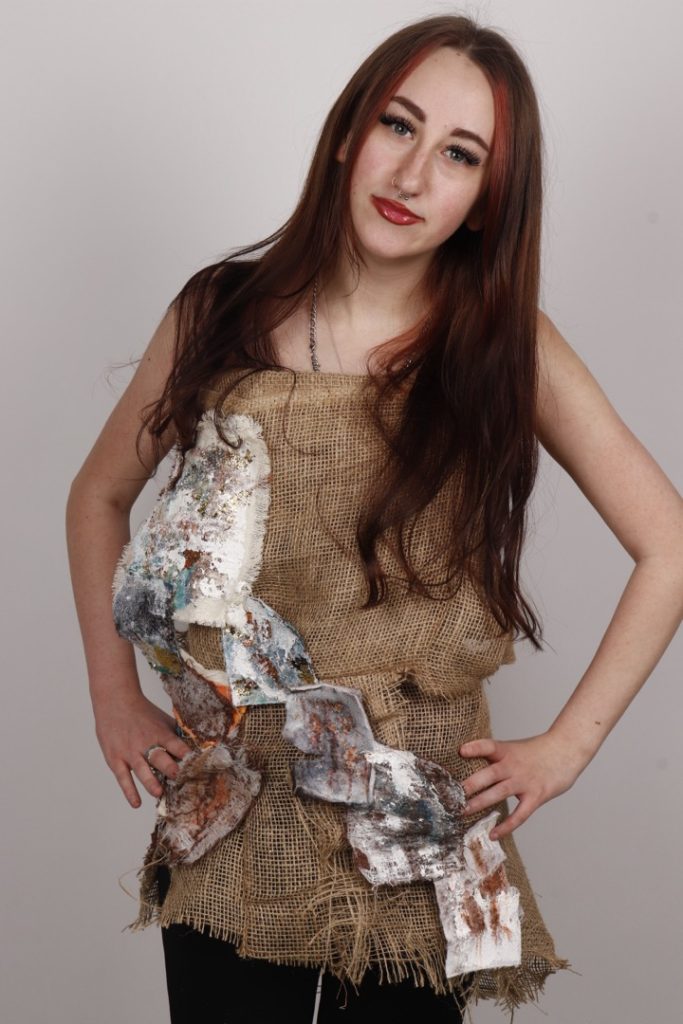
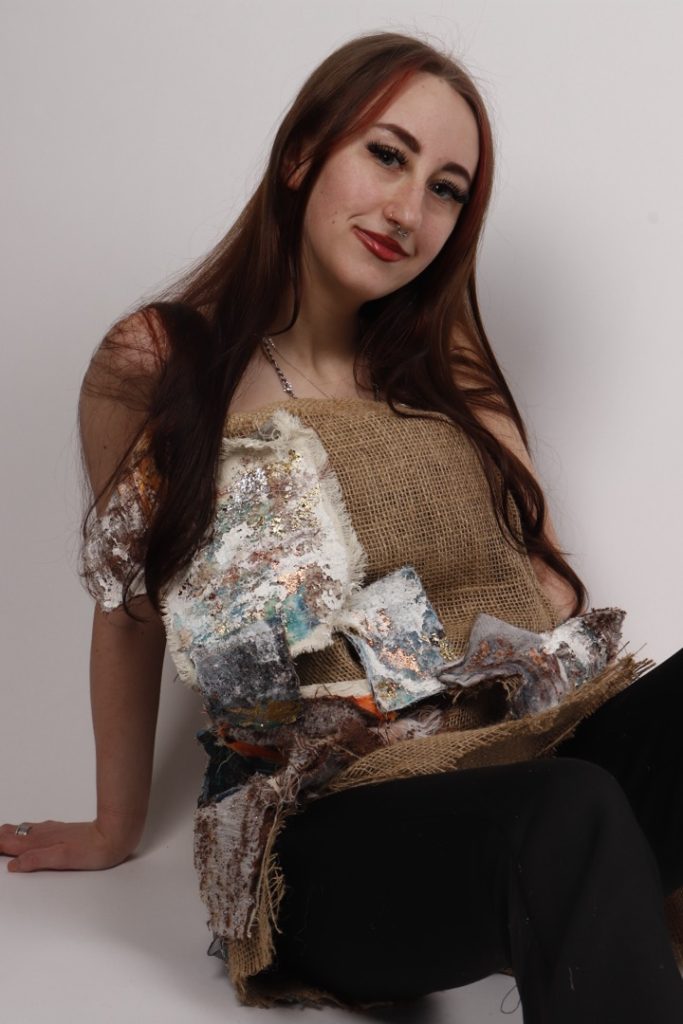
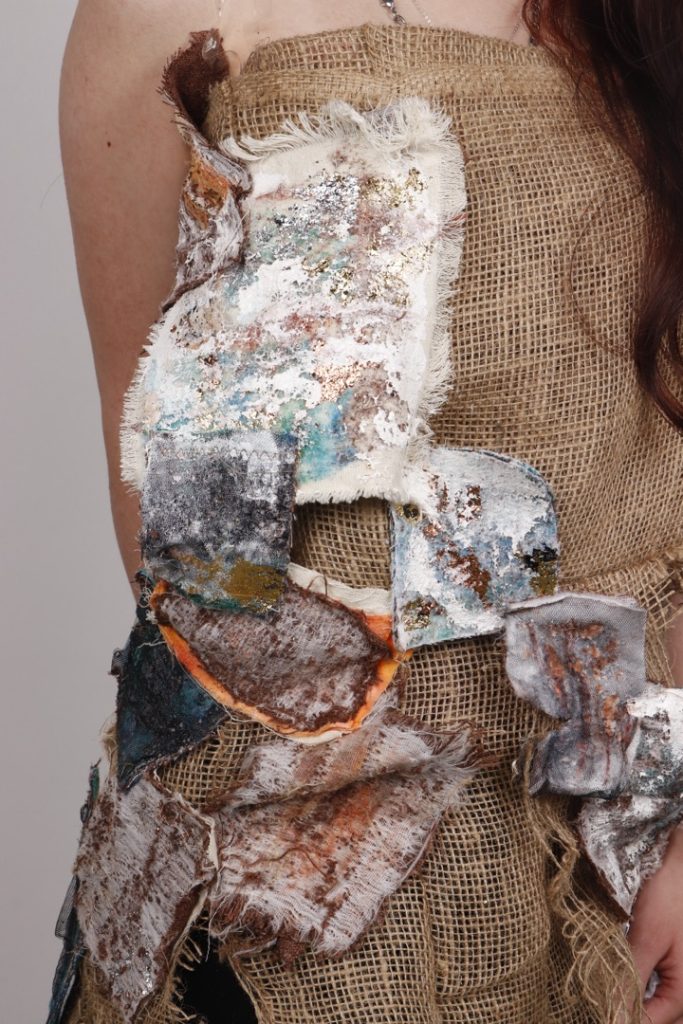
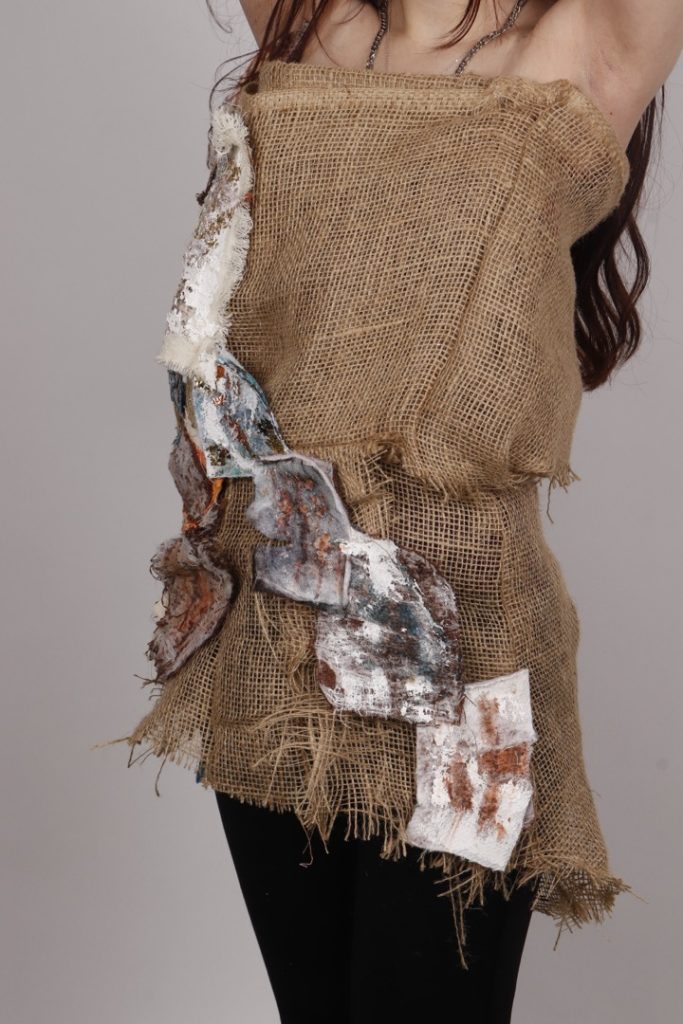
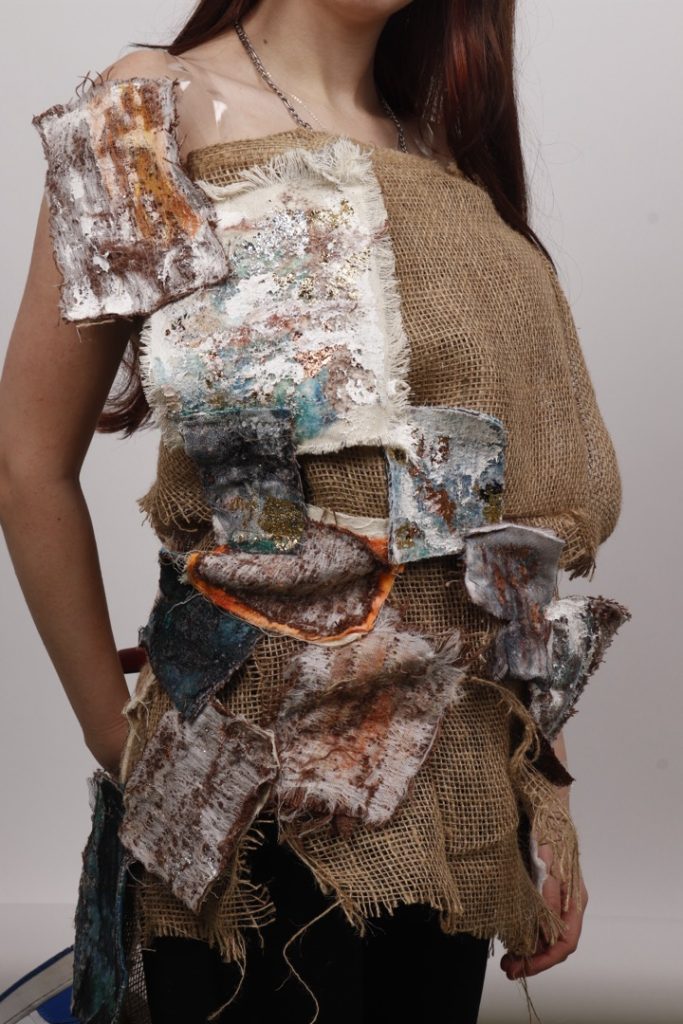
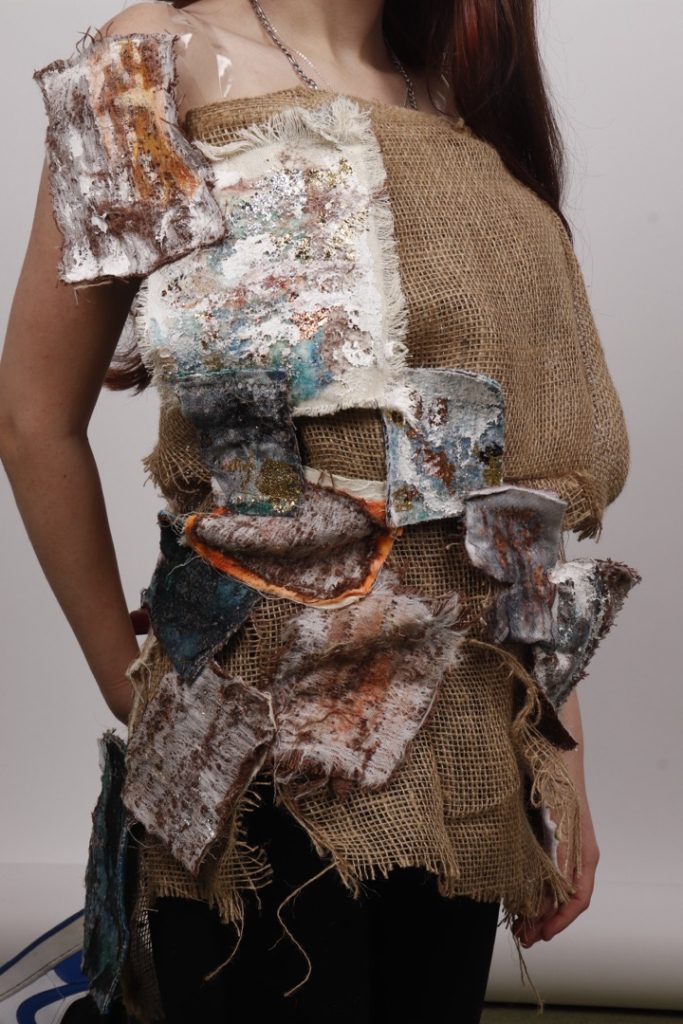
This textile garment explores the concept of surplus and discarded materials, and how they can have patterns and textures that make for beautiful and unique garments. This was done by treating the visual effects of erosion and rust as a symbol that anything can be considered beautiful.
To capture the organic beauty of neglected products, I used hessian fabric—something that would typically be used to transport items such as potatoes and then discarded—as a layered base. I added textures resembling peeling paint and jagged rusted metal using fabrics in a suitable colour scheme of mainly oxidised copper.
The silhouette is intentionally bulky and irregular to mimic the unpredictable patterns that are often found in things left to decay. This work is a way of proving that anything, neat or messy, can always contain beauty.